Italiano
 English
 Français
 Deutsch
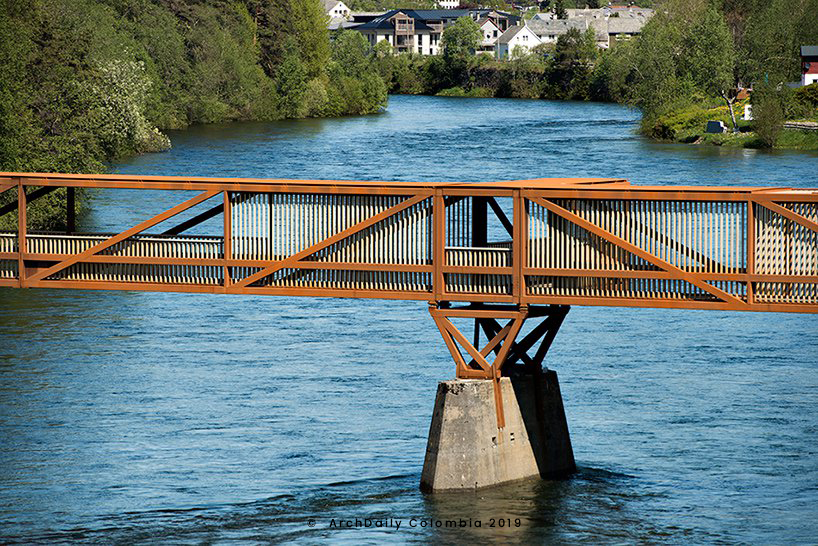
Pedestrian bridge in Western Norway. Steel and wood as main materials |
|
Since the early days of our blog, we have lovingly described the architectural beauties associated with the feudal past of the Pugliese farms, witnessing the passion that tie us up to this land and its beauties. |
|
In this fabulous land, the landscapes, which vary between hills and plains from the endless presence of olive trees, frame fifteenth-century fortresses, in tuff and white stone and with an authentic appearance, of poor art, almost dystopic. However, TrackDesign, which has a contemporary soul, tied to traditions, certainly, but always keen on what the modern architectural scenario has to offer, has never hidden a particular eye towards the northern Europe style. The steel and the typically industrial-style structures (without, however, categorizing them too much) represent the juice of the inspirations, carried by the cold northern winds and entered almost everywhere, starting from our homes to reach offices, premises, restaurants etc. Yes, because the industrial architecture that meet materials such as wood and corten steel, which restore old shipyards, industrial areas and transforms them into ultra-modern residential areas, is, in our opinion, beautiful. Today we will talk about a work with typically modern traits and we will show you how it fits perfectly contexts apart from urban and industrial sites, being able to embrace rural and immersed into deep nature scenarios too.
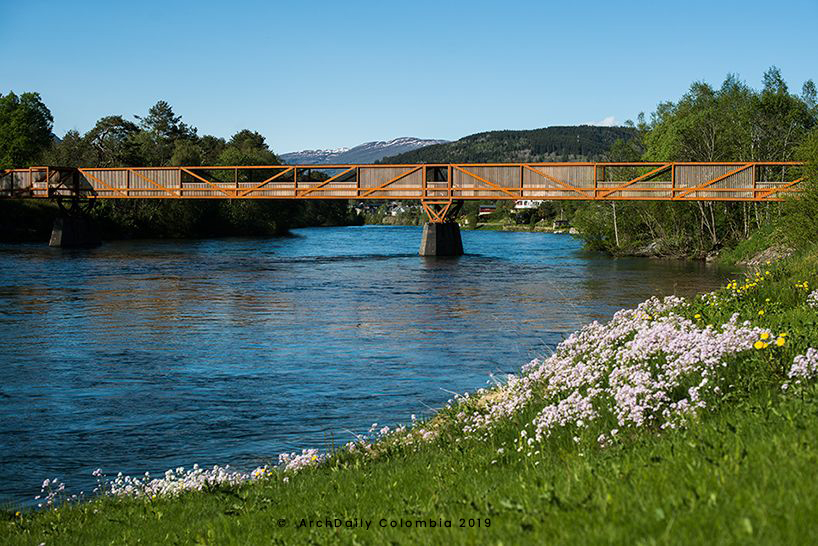
The bridge we are talking about was built in western Norway, by architects Rintala eggertsson, in 2016, at the mouth of the Vosso river. The pedestrian bridge with a rhythmic design replaces an old structure destroyed by a flood in 2014. IThe "Tintra" bridge (name given by the Norwegian architects) uses a bold combination of materials, such as corten steel for beams, while wood for flooring and ceiling. Substitute of a historical bridge damaged by a flood, this pedestrian bridge is characterized by the rhythmic play of its modules. The pedestrian, as was also required by the competition held to establish the winning company of the public tender, is guaranteed a view of the surrounding nature, with a great emotional impact. The rhythmic play of the bridge's modules, which has been reconstructed from the old pillars of the previous structure, tries to break down the monotony that one feels when walking from one side of the river to the other. The two "rooms" offer a break at the linear rhythm of the bridge, as well as the possibility of stopping and enjoying the landscape. The standard rhythm is given by steel pillars, while the wooden structure constitutes the variation of the melody, the secondary movement. The two materials have different roles: if steel expresses the strength of the supporting structure, the wood used internally warms the soul of those who cross it, creating, in observing the landscape, moments of peaceful intimacy.
The cost of bridge maintenance is eliminated thanks to the use of Corten steel and Accoya wood as coating materials, which combine durability, strength, and absence of the need for maintenance interventions, such as placing protective and anticorrosive surface paints. If we now know the properties of corten, namely reacting to atmospheric agents with the formation of a superficial oxide patina that protects the internal structure from corrosion, Accoya, instead, represents a typical structural wood used in construction in Northern Europe and in general in environments with impervious climatic conditions. This type of wood is therefore a material with very high performances which guarantees high performances of stability, durability and resistance to climatic factors. The addition of the roof also makes it possible to have fewer problems with snow, which is a problem for pedestrian bridges, especially in this geographical area. |
Articoli Correlati
- Pensiline Fotovoltaiche per aziende: la soluzione smart per energia e spazio
- Tendenze design 2026: la rivoluzione degli interni tra metallo e autenticità
- Pensiline fotovoltaiche in corten: design ed energia e contributi fino al 65% per le aziende
- Case in acciaio: il futuro dell'architettura tra design e sostenibilità
- Facciate ventilate e rivestimenti in lamiera metallica