Italiano
 English
 Français
 Deutsch
Malmo: history of a green city with an industrial style |
|
From a decadent industrial city to a futuristic and eco-sustainable gem. In a world scenario where the United States and China, flanked by other powerful industrialists, deny the climate change existence and every day feed the atmosphere with incalculable quantities of fossil fuels, there are, fortunately, cities that stand out. |
|
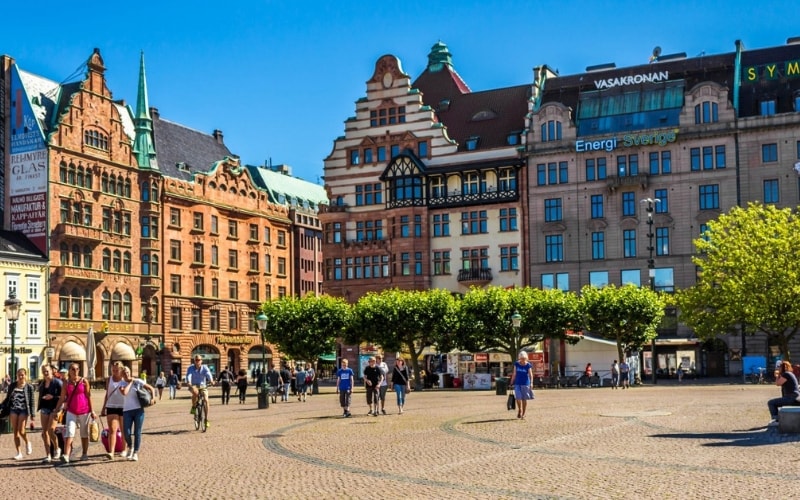
Today we will tell you the story of Malmo, the famous city in southern Sweden and considered a pearl of modern architecture.
From a crumbling industrial city to smart city: Malmö begun to live a strong innovative urban regeneration process based on green areas, renewables, energy efficiency, sustainable architecture and alternative transports. Malmo, the third Swedish city with just over 300 thousand inhabitants, has always been a naval pole of vital importance for the nation, with the presence of many shipyards that, due to the strong Swedish commercial connotation, represent a great contribution to the national incomes. During the twentieth century, the city experienced its first major change, made by massive migratory flows, givinga strongly multicultural and therefore futuristic connotation to the city already at that time. However, like all success stories, even Malmo, had to undergo its moment of stress, having been overwhelmed in the '80s by a strong economic crisis that caused a drastic surge in unemployment. The city of shipyards wrecked in a sad and decadent atmosphere of poverty, receding heavily from the economic point of view, though not social and cultural. In fact, as early as the first half of the 1990s, the city, led by enlightened men and inclined towards the common good, began to react proudly and with revolutionary policies. The government began a major investment plan to recover old shipbuilding areas, turning them into universities, green areas and completely green residential districts, favoring 30 years ago the surge of what we now call sustainable economies.
Old covered market of Malmö. Photo: World Architecture Festival/ Wingårdh Arkitektkontor Just think of theVästraHamnen area, the former industrial district, which now houses thousands of residents and students and is among the few examples in the world of a certain type of architecture, 100% sustainable and with the features of that industrial style that we like so much.
Efficient public transport by bus to the center every minute, lack of private cars, 490 km of cycle paths, car sharing, we try not to do the usual Nordic comparison, but it is complicated. Hillie, the district that by 2020 will host 9000 private residences completely powered by solar panels or Augustenborg, the Shoreditch of Malmo, another famous area of shipyards, countless waterways, considered a symbol of the city along with green roofs. It was in fact the city of Malmo to launch this new type of concept, now reproduced throughout Scandinavia and beyond. Green roofs are, in fact, a sustainable and intelligent architectural solution: they absorb and slow down water during storms, provide a better climate, preserve biodiversity, are thermal insulators, cool the polluted air of the city and protect the interiors from noise. And after all, they look wonderful.
Copyrights Scandinavian Green Roof Institute However, it may seem absurd, but also at those latitudes, before reaching this almost Tolkienian fantasy idyll, it was necessary to study and educate the Swedish society to change. In fact, in the years 2000, with the creation of the Botanical Roof Garden, it was launched along with the introduction of this new type of sustainable architecture, an educational program for citizens. Researches and training campaigns concerning the garden roofs,seminars, courses, guided tours, technical advices to support architects and designers and so on so forth. Nothing was left up to chance.
Copyrights World economic forum A coordinated plan, in short, between urban planning and training with the aim to educate citizens on a new type of approach to the city and architecture, which would later be exported throughout Scandinavia. 48 turbinesof 110 MW for 60,000 homes, roof gardens, zero emissions for 2020, industrial architecture, multiculturalism, Malmo is all this and much more. We love our country and we are not xenophiles, but we wonder all day, could such a change ever take place in other countries ? |




Articoli Correlati
- Pensiline Fotovoltaiche per aziende: la soluzione smart per energia e spazio
- Tendenze design 2026: la rivoluzione degli interni tra metallo e autenticità
- Pensiline fotovoltaiche in corten: design ed energia e contributi fino al 65% per le aziende
- Case in acciaio: il futuro dell'architettura tra design e sostenibilità
- Facciate ventilate e rivestimenti in lamiera metallica