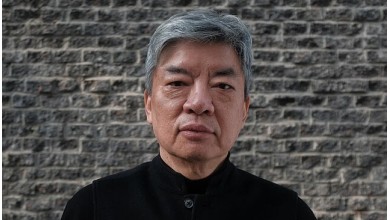
The 2025 Pritzker Prize for architecture has been awarded to Liu Jiakun, a visionary architect and founder of the firm Jiakun Architects, which opened its doors in Chengdu, China, in 1999.
His architecture stands out for an “honest” approach that favours the use of local and artisanal materials, rejecting prefabricated products in favour of a construction process that aims at sustainability. A creative path that draws on Chinese tradition to respond to contemporary challenges, without ever giving up an authentic language.
The Pritzker jury notes: “Rather than adopting a fixed style, Liu Jiakun has developed a design strategy that adapts to each individual project, carefully assessing its specific characteristics and requirements. His architecture is a reflection on reality, capable of transforming everyday spaces into new visions and scenarios.”
With over 40 years of experience, Liu Jiakun has signed numerous highly significant works throughout China. His dual career as an architect and writer enriches his work, creating a subtle fusion between narrative and design.
As the architect himself states: “Writing novels and doing architecture are separate arts, but perhaps precisely because of my dual path, there is a deep connection between these two worlds, visible in the narrative quality and in the search for poetry that I infuse into my projects.”
Among Liu Jiakun’s most emblematic projects are those made with “rebirth bricks”, obtained from the rubble of the devastating Wenchuan earthquake of 2008. These bricks, the result of technological research aimed at reinforcing them and making them functional, are the basis of two iconic works in Chengdu: the Hu Huishan Memorial (2009), his smallest creation, and West Village (2015), one of his most imposing and significant works.
The theme of the brick, a symbol of continuity between past and future, permeates many of the architect’s projects, particularly those of a cultural nature. Among these are the Museum of Clocks and the Imperial Kiln Brick Museum in Suzhou, where the material becomes a vehicle for a deeper reflection on memory and tradition.
Jiakun’s research also extends to other traditional materials, such as the Chongqing sand plasters used for the Sculpture Department of the Sichuan Fine Arts Institute, as well as for important restoration works, such as that of the Tianbao caves.
In each of his works, Liu Jiakun demonstrates an extraordinary ability to interweave tradition with innovation, giving life to an architecture that tells stories, preserves memory and, at the same time, looks to the future with great responsibility and sensitivity.
With the recognition of the 2025 Pritzker Prize, Liu Jiakun enters the history of architecture as one of the most significant figures of his generation.
His ability to interweave past and present, tradition and innovation, has made each of his projects a unique and sustainable work, capable of telling stories through materials and spaces.
His vision, which rejects the conventional and is rooted in local culture, not only preserves but enhances historical memory, building a future that does not forget its own roots. Liu Jiakun’s work continues to inspire architects and designers all over the world, offering new perspectives on how architecture can respond to global challenges with respect, poetry and authenticity.