In a world where space is shrinking and luxury is measured in centimetres, micro-homes are no longer just a response to the housing crisis.
They have become an architectural manifesto, a testing ground for new materials and new forms of living. And in this compact revolution, metal plays a leading role.
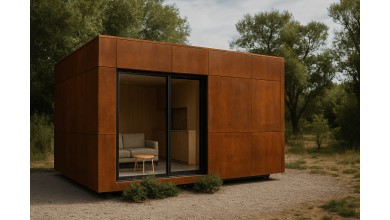
It is no coincidence that many of the most iconic micro-architecture projects focus precisely on steel, aluminium, Corten and titanium zinc.
Ductile, strong, lightweight materials. Ideal for homes that must be transportable, prefabricated and modular. Homes that challenge static living and embrace mobility and flexibility.
Real examples of metal micro-living:
1. Boxabl Casita – Nevada, USA Born from an idea by the American startup Boxabl, also backed by Elon Musk, the Casita is a prefabricated housing module made of composite materials, galvanised steel and high-performance insulating foams. Transportable on a trailer and assembled in less than an hour, it is a perfect example of how metal prefabrication can create liveable solutions of just 37 sq m equipped with every comfort.
2. MUJI Yō no Ie – Japan Muji, the brand that symbolises Japanese minimalism, has designed a 50 sq m micro-home prefabricated with a load-bearing steel structure and thermally treated wood panelling. A harmonious dialogue between technology and tradition, designed to be accessible, sustainable and liveable even for the elderly. A home that “breathes” with its surroundings, without ever forgetting the essential.
3. Wikkelhouse – Netherlands Although its outer shell is made of layered cardboard, the Wikkelhouse is based on a galvanised steel frame that guarantees structural strength and durability. Each module weighs around 500 kg, is fully dismountable and can be combined with others to create bespoke homes. A project that combines Scandinavian design, modularity and attention to the life cycle of materials.
4. KODA by Kodasema – Estonia This 26 sq m mini-home is made with a combination of steel, structural glass and insulated panels. Designed to be installed anywhere in less than 24 hours, it is an elegant response to urban microliving. KODA is a liveable sculpture that combines thermal, acoustic and visual comfort with clean, contemporary architectural lines.
5. Container Home by LOT-EK – New York The Italyn-American studio LOT-EK has transformed shipping containers into elegant and sustainable homes. Corten steel, technical insulation and large glazed openings define an architecture that does not hide its industrial origin but celebrates it. A radical way to reinterpret the “poor” materials of construction with an aesthetic and urban eye.
Metal as the key to transforming small-scale living
In microliving, every centimetre counts.
And metal allows precision, modularity and durability in spaces where every detail must be thought out, calculated and optimised. The choice of such a technical material is not only a matter of aesthetics or strength: it is a statement about the future of construction and the need for quick, sustainable and flexible solutions.
These tiny but intelligent homes remind us that living does not only mean “occupying space”, but giving shape to a refuge.
And that even 20 square metres, if designed with ingenuity and high-performance materials, can contain much more than ourselves: they can contain a new idea of home.